
This story was originally published by Madelyn Nonni at VTDigger September 25, 2025
For two weeks last spring, students and professors from Vermont State University collected cores of snow, sea ice and permafrost to uncover more about what’s hidden beneath the surface.
Madelyn Nonni is a reporter with the Community News Service, part of the University of Vermont’s Reporting & Documentary Storytelling program.
Picture flat white snow as far as the horizon. No trees, no rolling mountains. Just an endless scene of ice and frozen earth underneath an illuminated sky with the sun high in the air, regardless of the time of day.
This is what Castleton junior Environmental Science major Olivia Rutkowski saw as she stepped off the snowmobile in Cambridge Bay, Canada, this past May.
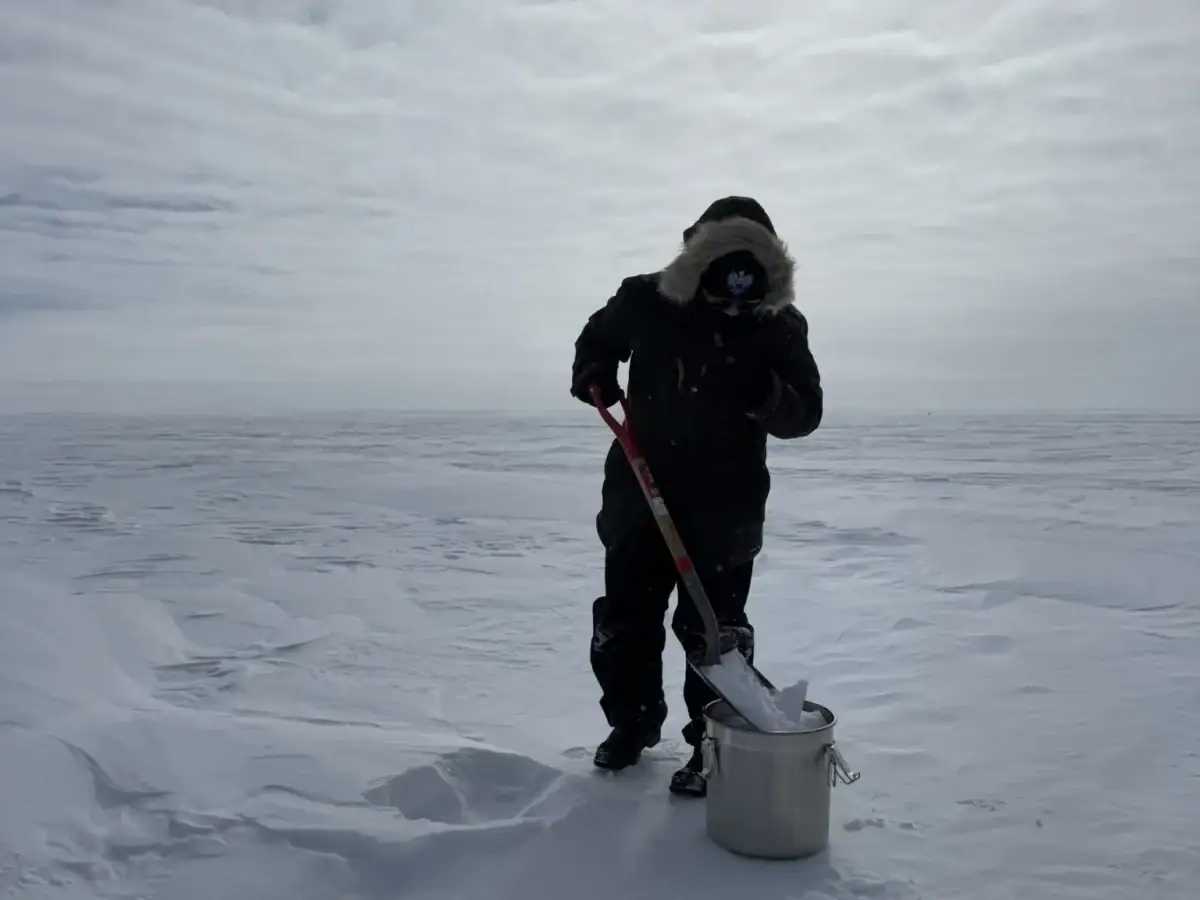
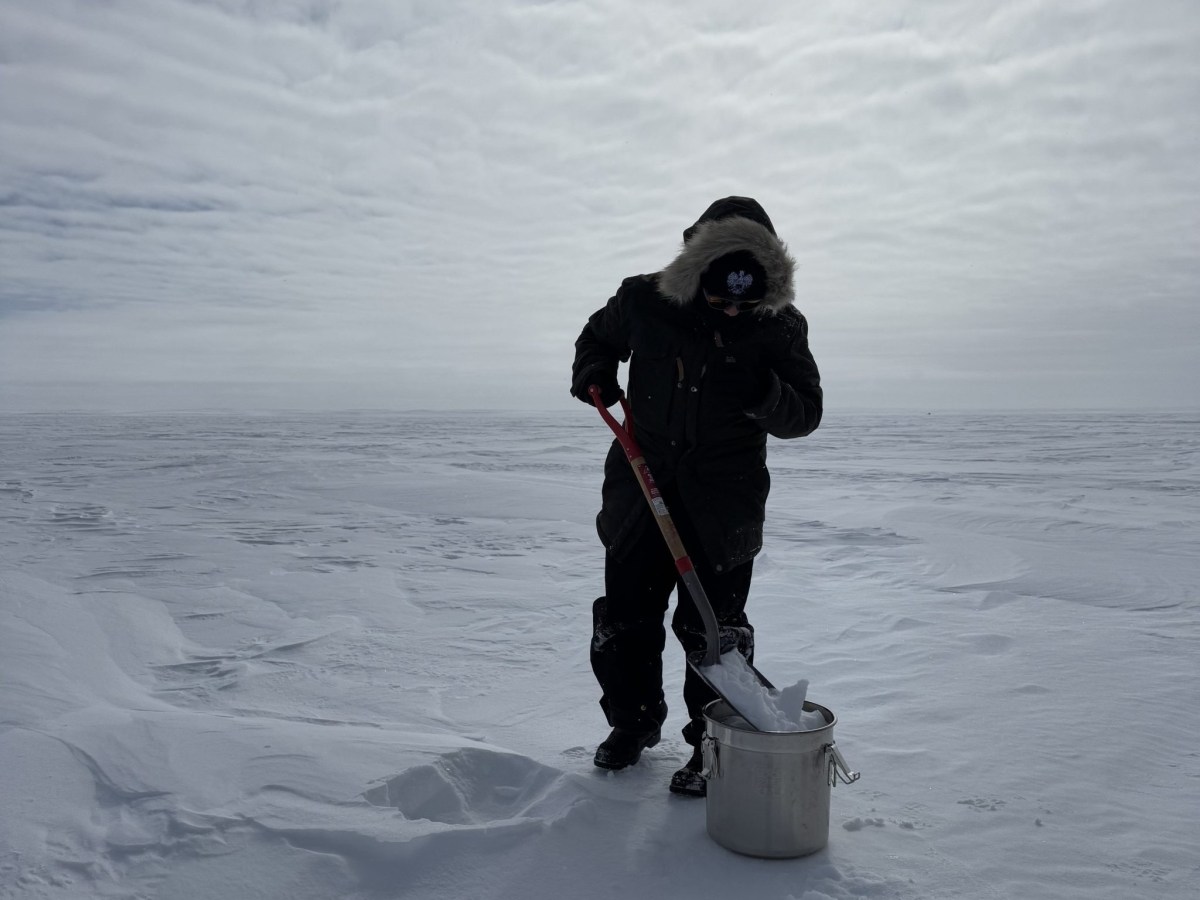
For two weeks, Rutkowski and five others lived and worked in the Arctic, collecting cores of snow, sea ice and permafrost to uncover more about the microbes hidden beneath the surface.
The research effort is in collaboration with the Dynamic Research of Arctic Cryospheric Organisms team, or DRACO. It’s a group of professors and students researching polar environments down to the nanoscale. The project is led by associate professors Ross Lieblappen and Michelle Sama of Vermont State University Randolph.
Joining them were environmental science and chemistry professor from Castleton Andrew Vermilyea and VTSU Randolph student researchers Elizabeth Goodell and Dominic Mazzilli.
“I’ve done field work around Castleton and Poultney, but this was my first time going out of the country to do it. It was definitely a new experience,” Rutkowski said.

The first week of the trip was spent snowmobiling over seven feet of ice to locations 15 to 45 minutes away to get samples of snow by ice drilling. The group would get as many samples as the day allowed to have thorough data pulled.
Before the day could end, the group would head back to the lab to process the samples.
“For my samples, it was putting them in a bucket, putting them in an incubator, melting them down, filtering all that water, assigning it a code so that I know which site it’s from,” Rutkowski said.
Rutkowski and Vermilyea are a part of a slightly different research effort.
“We’re looking at microplastics in pristine environments like the Arctic. The ocean, when we pull sea ice samples, our global oceans are connected. As plastics just degrade, they can be transported there, and you can see them in ice and water up there. They also can end up in the atmosphere, microplastics. From burning and processing of plastic and all kinds of reasons, and then can hang around up there for a long time and be deposited with rain and snow,” Vermilyea said.
Much of the work done in the field also transfers to further research after returning home.
Vermilyea adds that looking ahead for Rutkowski and her studies, the time she is putting in back in Castleton will be focused on developing more methods to research microplastics in soils, and accurately quantify them.