
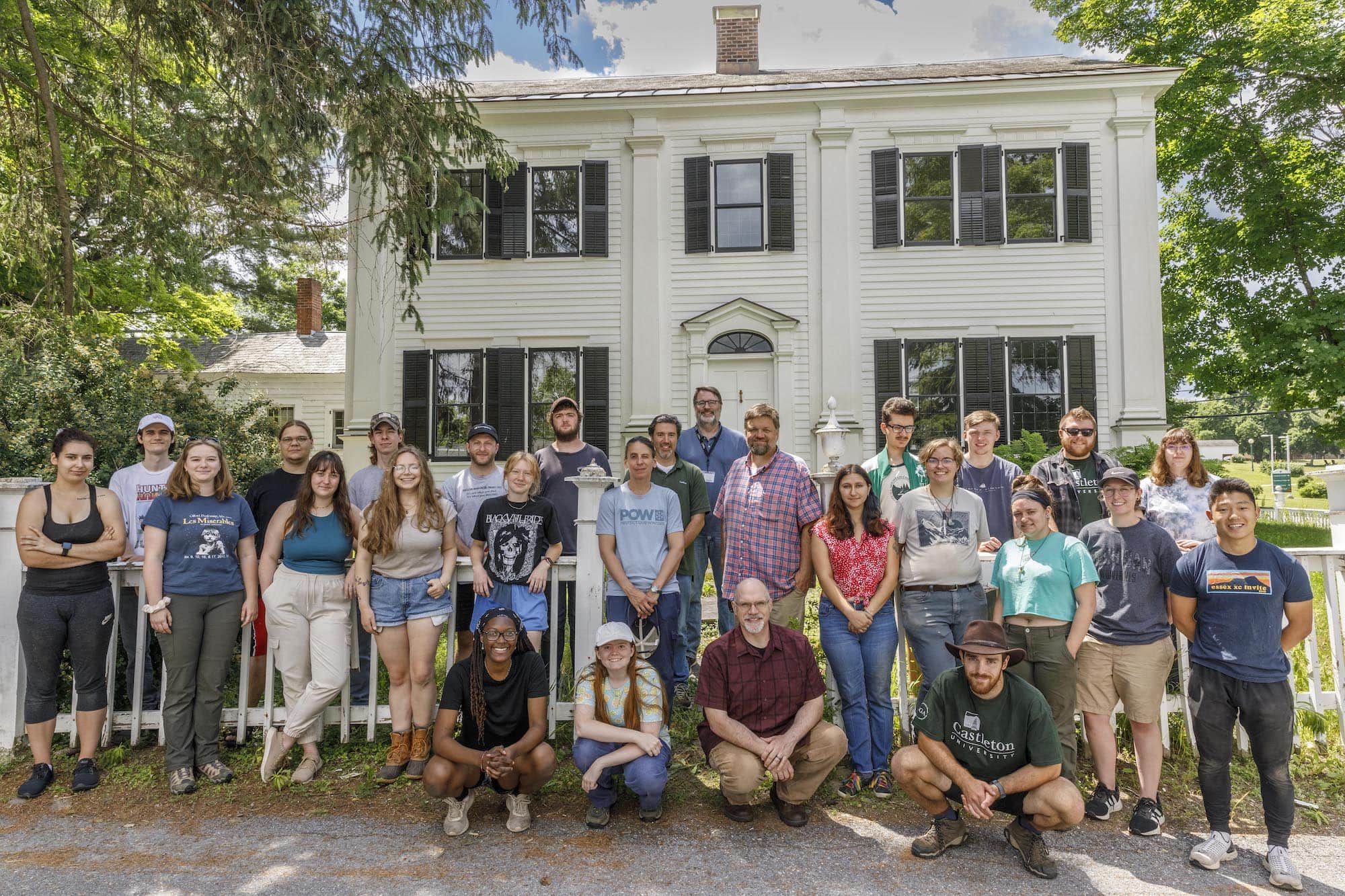
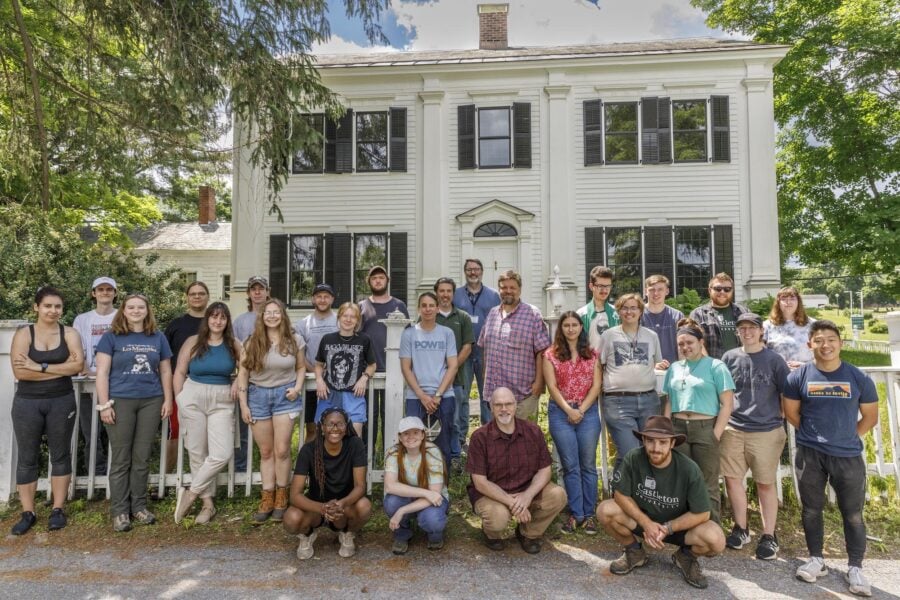
The Castleton Hidden History Project highlights a diverse and inclusive history of the Castleton, Vermont, area through collaborative, interdisciplinary research. Ongoing historical, archaeological, and geographical investigations are designed to study the lives and times of Castleton’s residents from the end of the Ice Age to the present day, with an emphasis on the lesser explored histories of local Native Americans, African Americans, and women.
Current project investigations focus on Granger House, a well-preserved early 19th-century home on the VTSU Castleton campus that is listed on the National Register of Historic Places. Ongoing work is studying the home’s potential ties to the Underground Railroad, the daily lives of its occupants, and the dynamic cultural landscape that surrounded the home.
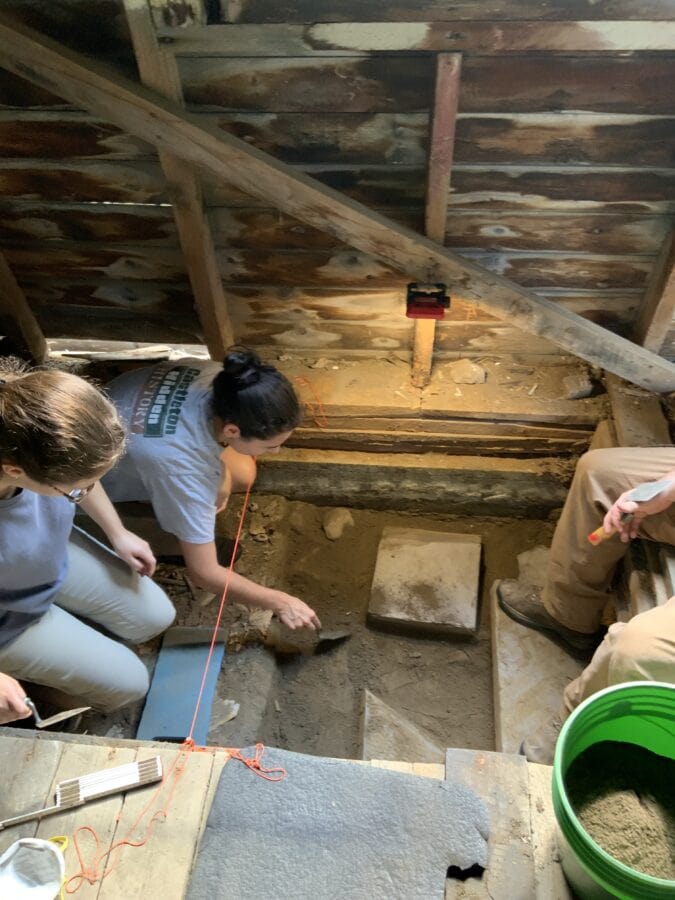
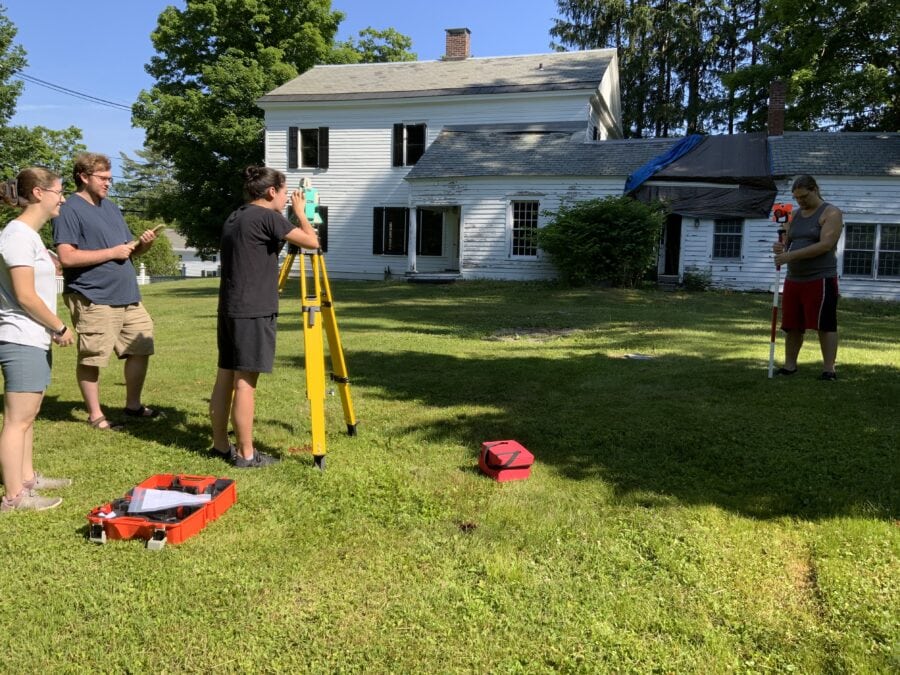
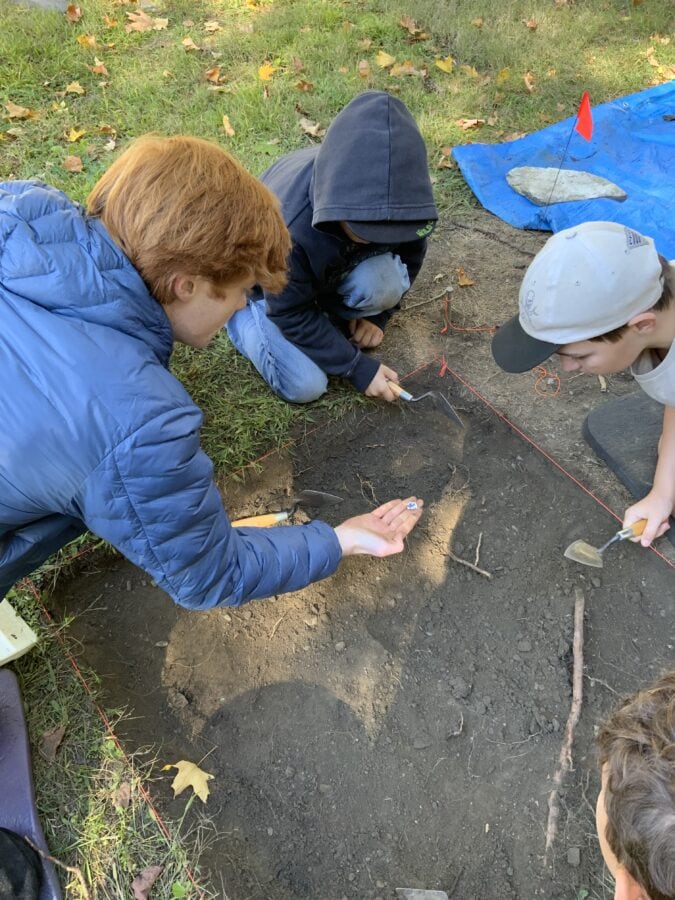
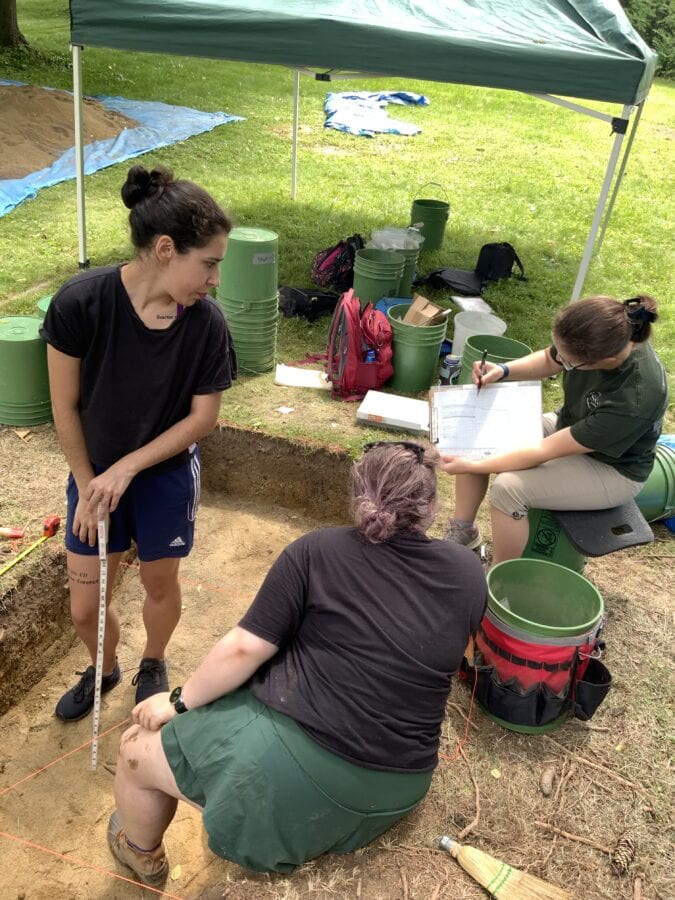
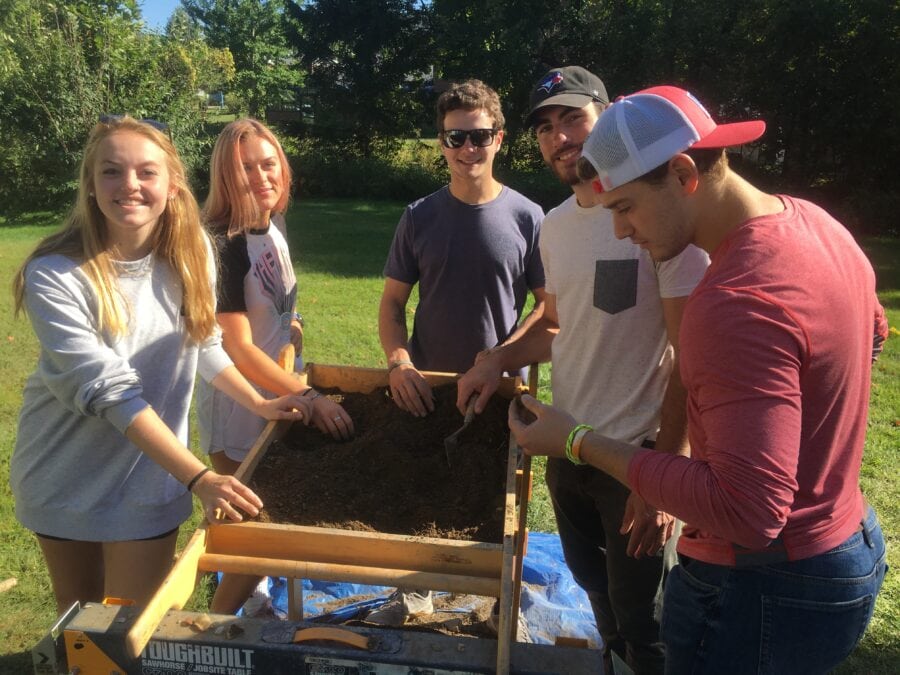
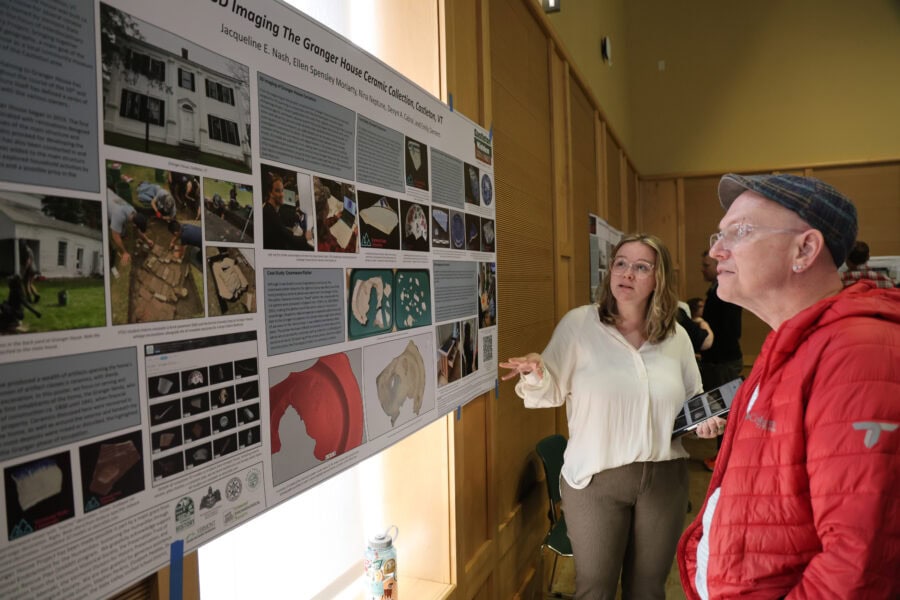
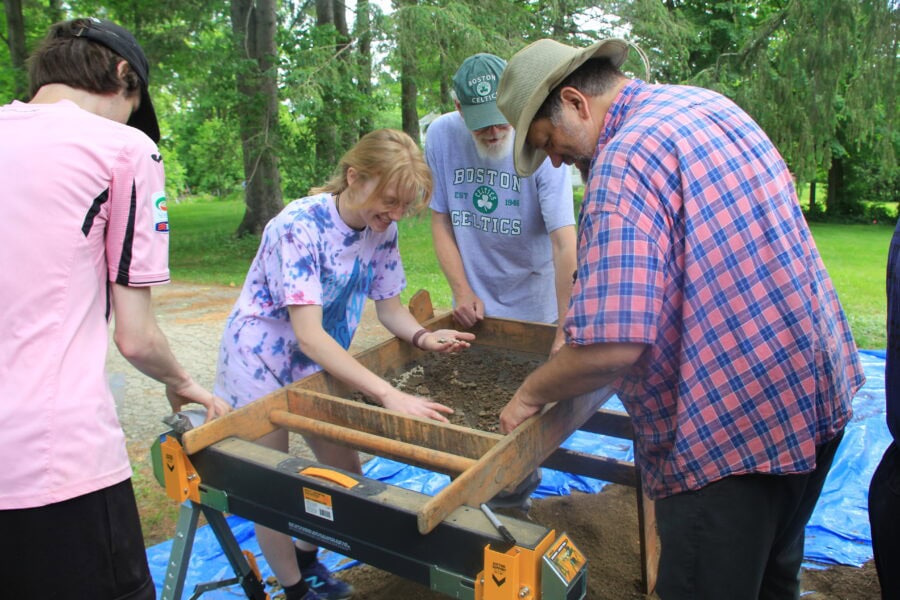
VTSU students in programs ranging from Anthropology, Archaeology, and Geography to History and Fine Arts are involved in rich experiential learning opportunities that include archaeological excavations, analyzing artifacts and historical documents, creating GIS maps, and developing museum exhibits.
Luke Kosby gained hands-on experience in archeological and anthropological research through field work at the Granger House during his time as a McNair Scholar.
Learn more about 3D Technology, Anthropology, Archaeology & Geography, or the McNair Scholars Program
Upcoming Events at Granger House

Volunteers Welcome!
Community members are welcome to participate in the archaeological work at Granger House. Opportunities are ongoing and evolve as the project progresses. For more information about how you can participate, please email us and a member of the project will be in touch to discuss how you can get involved.
About the Project
The Granger House is the future site of the Granger-Moulton Museum and Learning Laboratory, which will include engaging interactive exhibits accessible to diverse populations and will serve as a learning laboratory for VTSU undergraduates and local K-12 students.
Student Field Trips: We’re excited to share our work with local students! Since 2022, we’ve welcomed 477 K–12 school students and educators to Granger House to experience the excavation site firsthand. This fall (2025), we anticipate surpassing 500 student visitors. Teachers, please email HiddenHistory@VermontState.edu to explore a field trip opportunity for your students.
Funding: The Hidden History Project began with a grant from the National Endowment for the Humanities through the Sustaining the Humanities through the American Rescue Plan (SHARP) program—part of the American Rescue Plan Act of 2021, aimed at preserving humanities jobs and rebuilding programs.
Now, thanks to a powerful combination of new funding sources, the Granger House Revitalization Project is entering a pivotal phase:
- A Lake Champlain Basin Program grant—supported by NEIWPCC and the U.S. Environmental Protection Agency—will bring immersive archaeology programming to at least 15 classrooms across the region. Ten of these classes will also visit the Castleton site for hands-on excavation, artifact analysis, and cultural engagement with the Elnu Abenaki community.
- A Paul Bruhn Historic Revitalization grant from the Preservation Trust of Vermont—supported in part by the Historic Preservation Fund administered by the National Park Service—will fund critical structural repairs to the Granger House’s ell, foundation, and framing.
- Congressionally Directed Spending, championed by Senator Bernie Sanders, will support essential accessibility upgrades, including ADA-compliant features such as a ramp, bathroom, and second-floor access, as well as an expanded entryway to increase exhibition capacity.
Together, these investments ensure that the Granger House will be both historically preserved and fully accessible—ready to welcome students, educators, and visitors for years to come.
Project Highlights
Hidden History Project In The News
- Students take part in Castleton archaeology dig (WCAX)
- Granger House shares findings (Castleton Spartan)
- Students uncover the past in Castleton (Rutland Herald)
- Historic building to be site of new museum (Rutland Herald)
- Artifact Roadshow invites locals to share their unidentified objects (Rutland Herald)