Atmospheric Sciences students at Vermont State University Lyndon once again embarked on a storm chasing adventure this summer. The program, organized by State University of New York (SUNY) Oswego’s Storm Forecasting and Observation Program, is designed for students to apply concepts from the classroom to real-world forecasting and observation of convective storms.
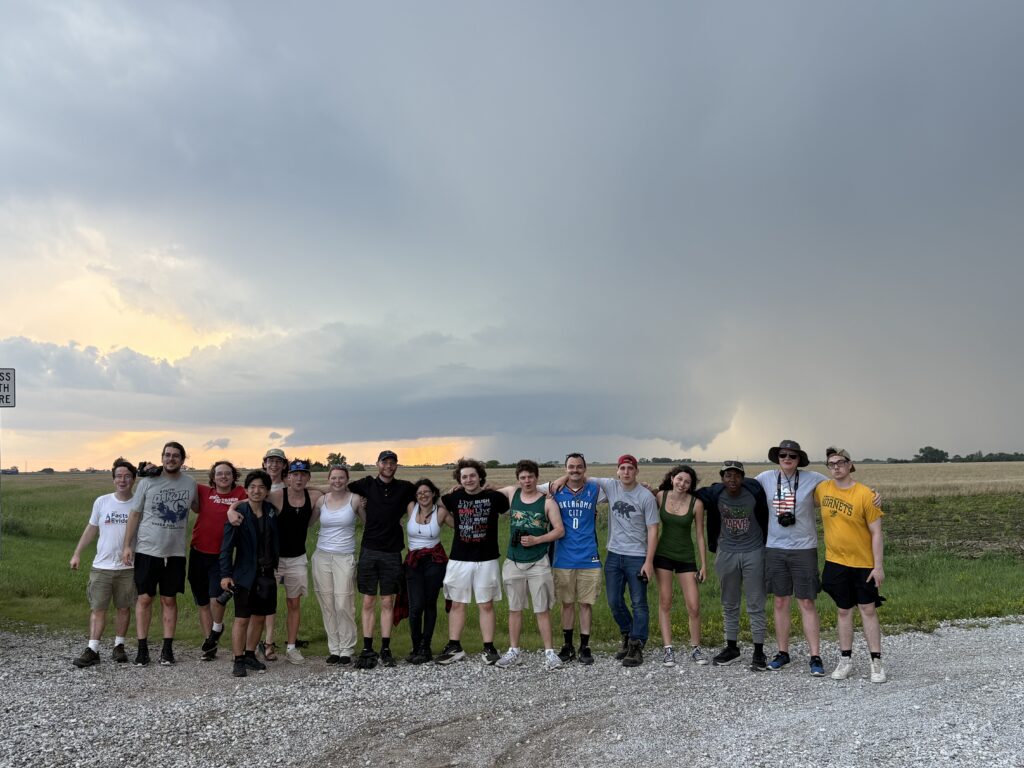
A total of fourteen students, three from Vermont State University, participated in the trip. Vermont State University also sent two assistants to help with driving and instruction. The students received college credit toward their atmospheric sciences degrees.
Jason Kaiser, assistant instructor and Vermont State University learning spaces technology specialist, and Charlie Schwenker, an atmospheric sciences student, served as assistants and drivers during the three-week trip. Other attendees included Patrick George (Class of 2026), Ben Cohen-Tyler (Class of 2026), and DJ Fisher (Class of 2028).
“In the Northeast, views of storms are often blocked by trees and terrain,” said Kaiser. “Out on the Plains, you can see for miles. That unobstructed view gave students an incredible opportunity to observe supercells firsthand. It was really rewarding and exciting to see the students directly applying what they were learning. By the end of the experience, they were able to explain out loud the ‘why’ behind some of the storm structures they were seeing.”
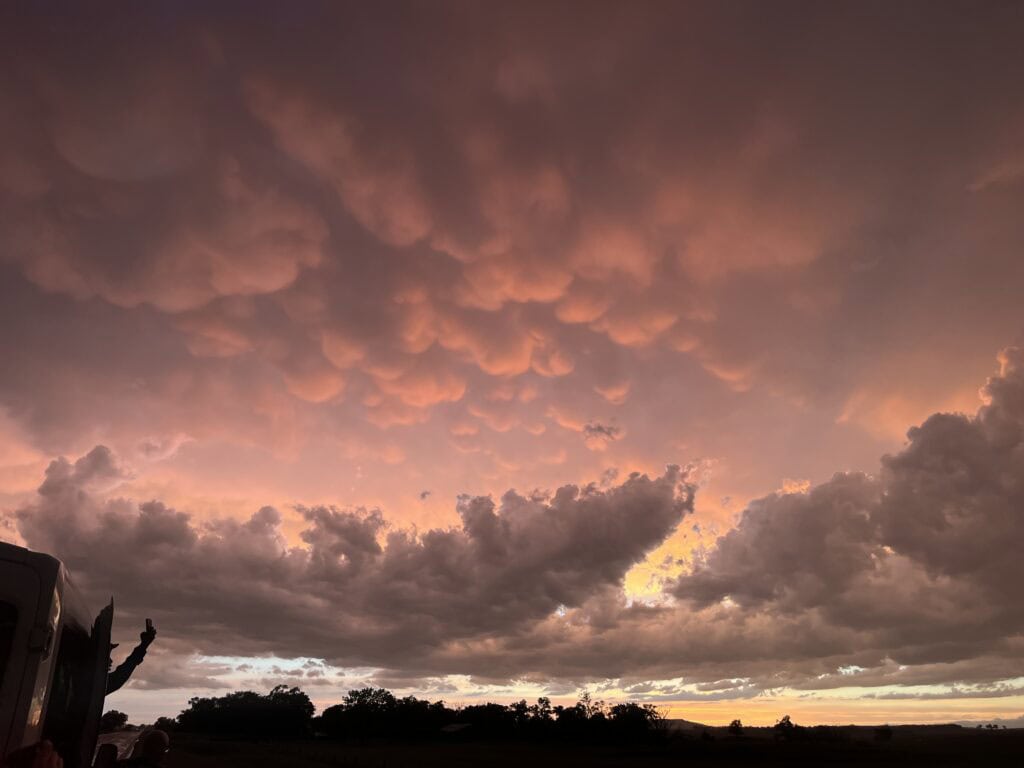
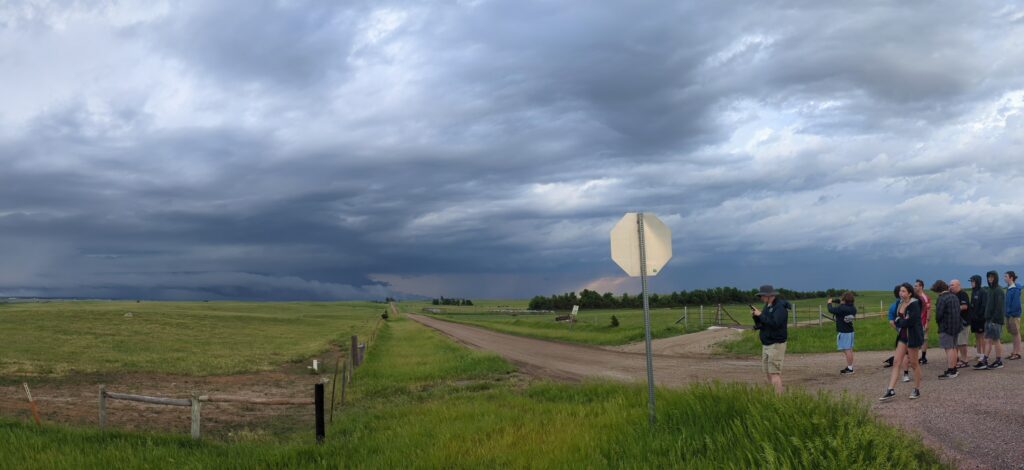
From May 28th to June 6th, students chased storms in Colorado, Nebraska, New Mexico, Oklahoma, and South Dakota. The group saw numerous supercells and wall clouds, multiple funnels, a possible tornado, shelf clouds, beautiful mammatus, golf ball sized hail, and breathtaking lightning activity.
The first two weeks were spent in the field forecasting severe weather, observing storm structure, and collecting data.
“Experiencing the trip from a driver’s point of view allowed me to take a step back and observe a bit more,” Schwenker shared. “Watching the students’ forecasts pay off in real time was awesome to see.”
Students were involved in the forecasting and data collection process, including daily weather balloon launches to capture vertical profiles of the atmosphere. Sounding data were publicly shared with local National Weather Service offices to better inform their forecasts. For the last week of the program, students conducted research projects related to the storms they chased.
“The experience was enthralling and we were always watching for something,” Fisher noted. “I will never forget seeing a rapidly rotating wall cloud on the verge of touching down in South Dakota, before it became a verified tornado. The trip allowed me to see new places and get hands-on experience and education for forecasting and storm observation.”
Kaiser added, “Some of my favorite moments were seeing mammatus clouds lit up by the sunset, simultaneously seeing both an outflow shelf cloud pointing away from the rain and inflow wall cloud pointing toward the rain, and observing a nearly stationary supercell for over an hour with incredible striated structure and nearly constant lightning. You can teach the concepts in the classroom, but there is nothing like experiencing this in-person and in real time.”
“Vermont State University’s Atmospheric Sciences program is well known for producing meteorologists who have gone on to gain admission to top graduate programs and to lead the industry,” said Ari Preston, Associate Professor of Atmospheric Sciences at Vermont State University. “Opportunities like this storm chasing trip bring real-world experiences that will benefit students for years to come.”
The Atmospheric Sciences program is the only one of its kind in Vermont. Through it, students can access an on-campus TV station, weather center, and observation deck, as well as unique experiences like storm chasing.