

Why Study Electrical Engineering Technology at Vermont State?
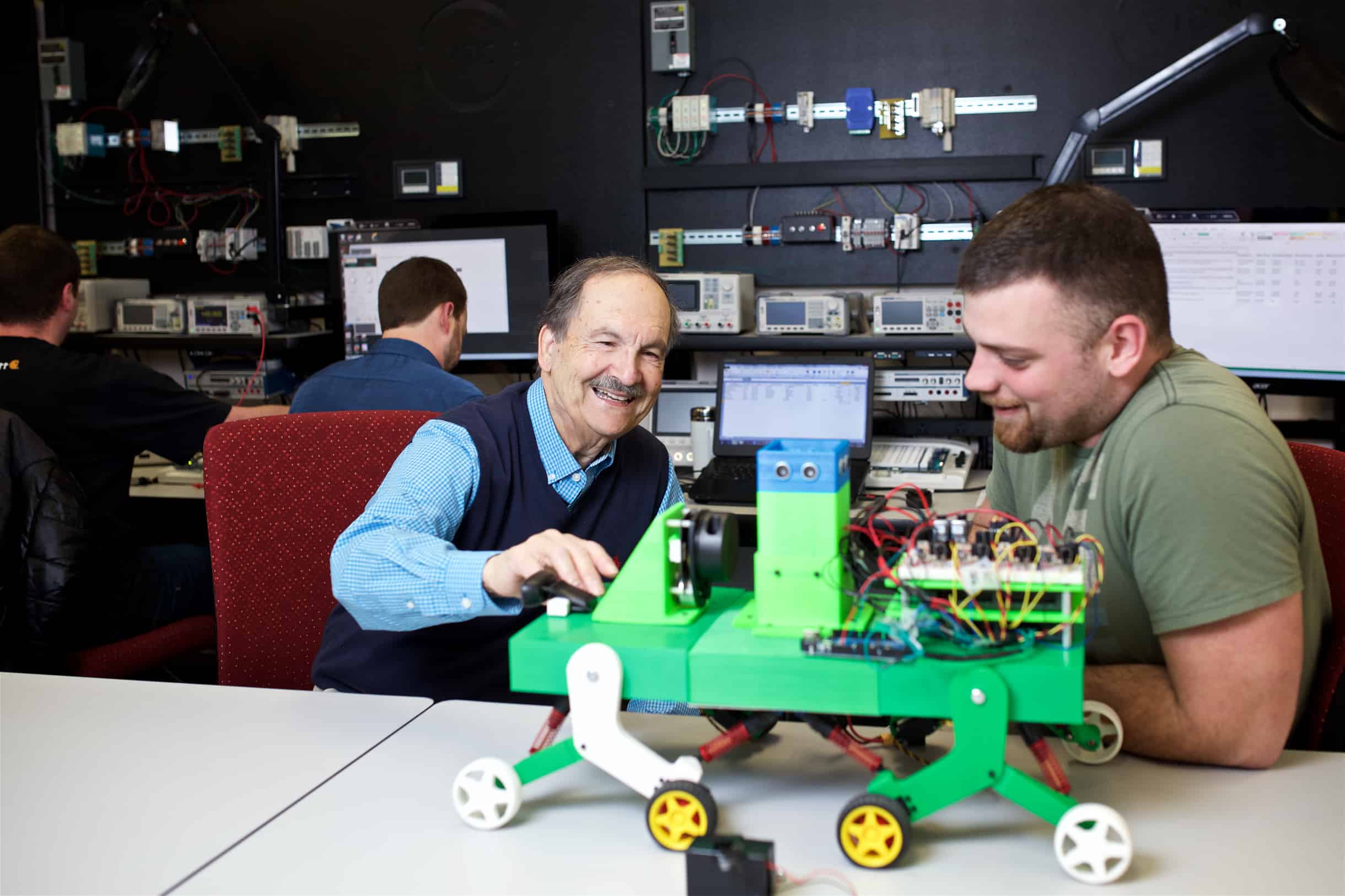
- Hands-on Learning: We’ll guide you from basic to advanced principles through a 1:1 ratio of classroom education and laboratory training, reinforcing the theory you’ve learned with practical experience.
- Advanced Technology: You’ll practice with the instruments, power supplies, and controllers widely used in the industry, so you’ll enter the field with the latest knowledge and skills.
- Career Preparation: Graduates from our programs have gone on to careers as electrical engineers, design engineers, lead engineers, applications engineers, management and more in the power industry, biotech, electronic manufacturing, robotics, aerospace, and numerous other industries.
- Opportunity: Whether you choose to go directly into the workforce or seek an even higher level of education, you can be certain that you have the know-how and skills to thrive.
Start Terms for Electrical Engineering Technology, B.S.
- Fall 1 – August 24, 2026
- Spring 1 – January 19, 2027
Request Information
Loading…
Sample Courses
- Sensors & Instrumentation
- Electromechanical Power Systems
- Control Systems
- Electromechanical Systems
Related Programs
Student Learning Outcomes
- Apply knowledge, techniques, skills and modern tools of mathematics, science, engineering, and technology to solve well-defined engineering problems appropriate to the discipline.
- Design solutions for well-defined technical problems and assist with the engineering design of systems, components, or processes appropriate to the discipline.
- Apply written, oral, and graphical communication in well-defined technical and nontechnical environments and identify and use appropriate technical literature.
- Conduct standard tests, measurements, and experiment.
- Function effectively as a member of a technical team.
Program Educational Objectives
- Provide students with the capabilities to be immediately employable and productive in the workplace.
- Provide the educational foundation so that graduates are knowledgeable in both theory & application with the ability to analyze, design, and implement electrical and electronic systems and products.
- Qualify graduates for positions of responsibility with the ability to apply project management techniques to electrical/electronic(s) systems.
- Instill the need for creativity in the design of systems, components or processes by having the students research and develop multiple solutions to problems and use a variety of tools and techniques in their work.
- Prepare graduates for lifelong learning and adaption to new and emerging technologies.
- Provide the base of knowledge so that the graduate can continue their formal education.
Student Stories

“For me, the labs were what made everything click. You could construct a circuit based on the theory learned in the classroom and compare your math to your measurements on a DMM or scope, tweaking values and observing their effects along the way. There was also a collaborative environment in the lab, where if some folks were struggling with a concept or a specific circuit, others could jump in and provide feedback on wiring, polarity of components, et cetera.”
Trevor Best
Meet Our Faculty


Ready to Take the Next Step?
Get started during these start terms:
- Fall 1 – August 24, 2026
- Spring 1 – January 19, 2027