
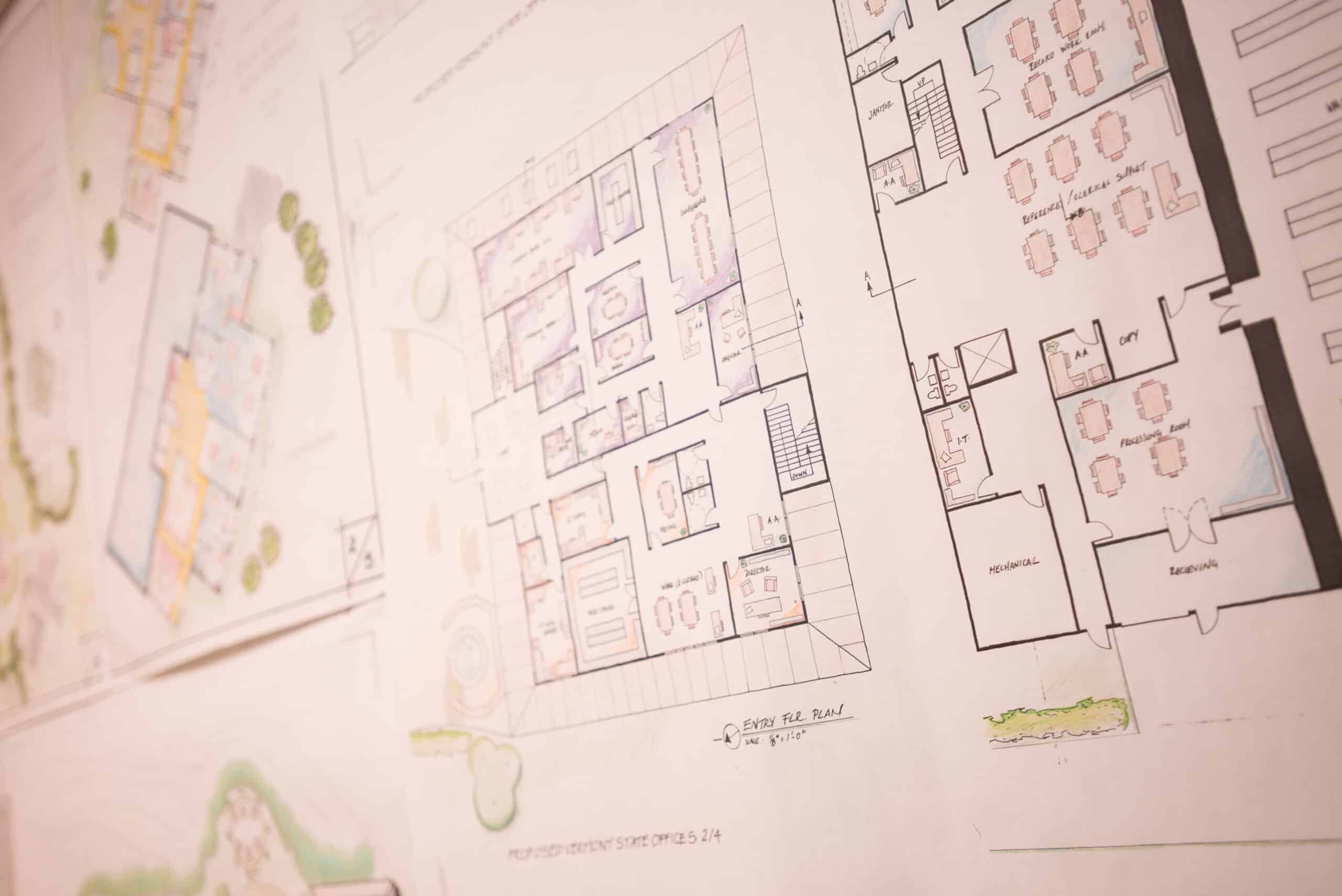

Why Study Architectural Engineering Technology at Vermont State?
- Many Career Paths: Explore your options and find the niche that fits you best. You’ll be exposed to many distinct specialties within the construction industry to help you identify and build your skills in the area that grabs your interest.
- Work-Ready Skills: With your architectural engineering technology degree, start a job with confidence from day one. This hands-on program gives you plenty of practical experience with real-world projects. You’ll build skills in industry-standard design software, the construction planning process, and working with teams to see a project through to completion.
- Emphasis on Sustainability: Learn the key elements of green design, energy efficiency, and cost savings. You’ll bring extra value to the job in a context where companies are increasingly committed to building in a way that is good for both the bottom line and the planet.
- Individualized Attention: Enjoy the benefits of small class sizes. A student-teacher ratio of 1:14 means that your instructors will know you personally and provide individualized instruction and support when you need it.
- A Foundation to Build On: Get off on the right foot. If you’re interested in pursuing a bachelor’s degree or professional certification, this rigorous program will give you a powerful head start. Continue to develop your professional competence and apply to architecture school or other engineering programs, including our own B.S. in Architectural Engineering Technology.
Start Terms for Architectural Engineering Technology, A.S.
- Fall 1 – August 24, 2026
- Spring 1 – January 19, 2027
Request Information
Loading…
Sample Courses
- Construction Materials & Methods
- Architectural History
- Environmental Systems I
- Structural Design
- Architectural Design I
- Building Information Modeling (BIM)
Student Learning Outcomes
- Apply knowledge, techniques, skills and modern tools of mathematics, science, engineering, and technology to solve well-defined engineering problems appropriate to the discipline.
- Design solutions for well-defined technical problems and assist with the engineering design of systems, components, or processes appropriate to the discipline.
- Apply written, oral, and graphical communication in well-defined technical and nontechnical environments and identify and use appropriate technical literature.
- Conduct standard tests, measurements, and experiment.
- Function effectively as a member of a technical team.
Program Educational Objectives
- Engineering skills: analyze, design, and implement building-related systems and products.
- Engineering management skills: handle administrative, personnel, and technical project issues through appropriate communication and management techniques.
- Design skills: demonstrate competence and creativity in the design of systems, components, or processes by researching and developing appropriate solutions to problems and using a variety of tools and techniques in their work.
- Innovation skills: engage in post-degree learning and adapt to new and changing technologies.
Student Stories

“I knew that I learned best in smaller classroom settings with more one-on-one time with the teachers, and I knew that I would flourish in a college with more hands-on learning.”
Dillon Delano
Meet Our Faculty


Ready to Take the Next Step?
Get started during these start terms:
- Fall 1 – August 24, 2026
- Spring 1 – January 19, 2027